 |
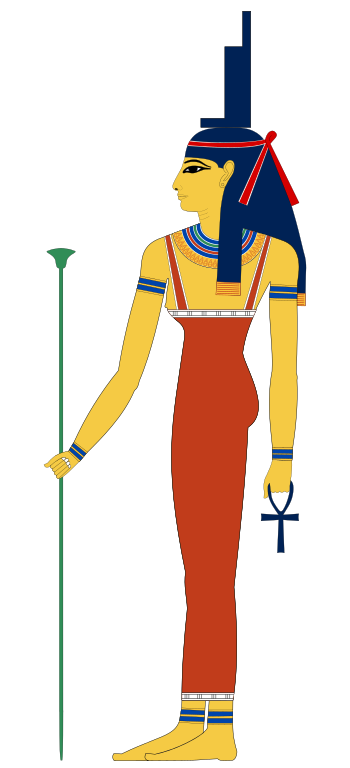
| Isis |
Title: Isis
Nursing Horus
Year: Late
Period, 575 B.C.
Material: Bronze
Creator:
Saqqara, Egypt
Collection: University
of Pennsylvania Museum
This
object is a statuette of the Egyptian goddess Isis nursing her son, the god
Horus. Isis is the goddess of motherhood, magic, and fertility.
Horus
is the god of war, sky, and protection. He is the most important god in the
Egyptian religion.
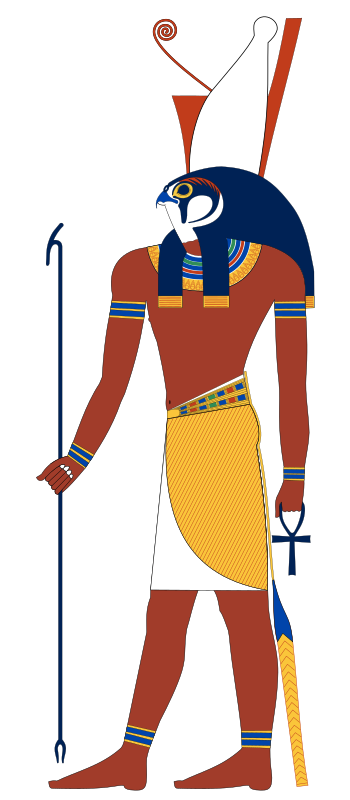 |
| Horus |
This
object is mostly important to scholars today, although it still has some
importance to Egyptian culture. Scholars can learn a great deal about ancient
Egyptian culture and religion by studying the gods and goddesses. The
relationships between the gods reveal a lot about the complex nature of the
Egyptian religion. For example, Isis was married to Osiris, the god of the
dead; he was murdered by another god, Set, and cut into pieces. Later after
Horus was born, Seth was enraged and tried to catch Isis and Horus. Isis hid in
the Nile River Delta and invoked divine powers to protect them. This object is
also and important art piece. Is important to see the evolution of Egyptian
craftsmanship.
This
object might not be important to people that aren’t interesting in ancient
cultures. This object may not be interesting to people that practice and
orthodox religion that condemns polytheism.

This
object was most likely acquired during the museum’s early collection period. I
assume that is was a gift or part of an expedition of some kind. The statuette
is on display in a glass case sitting on a red box. It looks like this
statuette was part of an alter or another decoration. The object is next to
other statuettes and a large mural. These objects contribute to our
understanding of Egyptian art and religion. This object is on display to
represent two of the most important figures in the ancient Egyptian religion.
The label for this object includes the typical information: item, date,
location, material, and size. Below this there is a short paragraph explaining
the story of the birth of Horus. The text seems to be written from the point of
view of a curator, however the text is easy to comprehend. I felt like the text
missed a key point. It doesn’t directly talk about Isis, but Horus. It also
doesn’t directly mention that Isis is Horus’s mother. The context is hard to
understand unless you read all of the text before this object. An opposing
point of view about this object might be from someone in the cult of Isis. They
would view Isis as a more important god than Horus. Another opposing point of
view might be anyone who doesn’t believe in mythology. They might tell a
narrative that doesn’t highlight the importance of Isis as a goddess, but as a
mythological being.
Other
fields of study that would add to your understanding of the object includes:
Egyptology, mythology, book of the dead, Osiris, and ancient Greece.
 |
| Tyet |
To
engage visitors with this object I would like to have other versions of the
same statue and compare them to its Christian counterpart. The image of Isis
nursing Horus was the precursor to images of Mary and Jesus. I think it would
also be interesting to tell the story of Isis and Horus in the gallery. This
could be done several ways. I think paper theater would be cool. However, there
are some parts of the story that are inappropriate for kids. I am not sure if
it would be right to omit those parts or just not make them explicit. Isis also
has a symbol associated with her, tyet. This would be a fun craft to make with
kids. A tyet was usually used as a funerary amulet.


No comments:
Post a Comment